
Scout Açısı was published in 2020 as a deliberately accessible book about scouting. We made a conscious decision not to turn it into a technical manual. I wanted the everyday football supporter, not only people already working in professional football, to be able to read it, understand how a scout looks at the game and perhaps begin watching football from a slightly different angle. That required restraint. Some subjects were introduced only briefly, while others were left outside because explaining them properly would have changed the nature of the book.
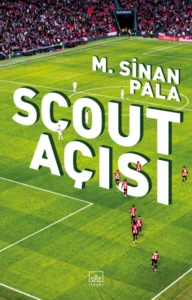
The response made the next step obvious. Readers appreciated the accessibility, but many of them also wanted the material we had deliberately held back. They wanted the more technical book, and I already wanted to write it. Work on the second book therefore started almost immediately, with a fairly straightforward ambition: if Scout Açısı introduced the perspective, its successor would go deeper into the craft, methodology and structures behind scouting. I revisited that journey earlier this year in Scout Açısı Five Years Later, still thinking of Scout’s Vision as the second book. The work continued, but eventually the biggest change was not another concept or another revision to the outline. It was accepting that the second book I had been trying to finish for years should not be one book at all.
Some of the ideas that accumulated inside Scout’s Vision are older than Scout Açısı. In 2015, at the Bursaspor Çalıştayı, I presented a framework called the F-F-F Üçgeni, built around Fayda, Fırsat and Fiyat. Looking at those slides eleven years later is almost funny. The presentation looks primitive, the terminology has changed and much of the thinking underneath it has been rebuilt several times. Yet the basic problem is recognizable. I was already trying to understand a footballer through more than his immediate performance, connecting what he could provide, what he might become, what the club needed and the economic reality surrounding the decision. That early framework eventually became one of the ancestors of the 3P Model.

By 2017, while preparing training material for new scouts at Scoutium, I was thinking more deeply about the scout himself. One sentence from those slides still represents much of what I believe today: “Scouting, oyuncu bulmak değil oyuncuyu anlayabilmek ve anlatabilmektir.” Scouting is not finding players, but understanding the player and being able to explain him. That distinction has become even more important as technology has made players easier to find. Access to information has improved enormously, but access and understanding are not the same thing. In my view, observation becomes more important rather than less important in the age of data scouting, because somebody still has to watch the footballer, interpret the context around what the numbers describe and articulate what those numbers cannot fully explain.

The following years were not spent systematically developing Scout’s Vision. I wrote for blogs and magazines, appeared on radio programs and discussed scouting alongside tactics, transfers, technology, youth development, club structures and the wider problems around football. I maintained a website between 2017 and 2019 mostly as an archive for those articles, then abandoned it. There was no master plan connecting all of this material, but there was continuous accumulation. Questions in one area kept opening questions in another, while experience gradually changed the way I understood some of the original questions themselves.
Different formats also forced those ideas to be expressed differently. Between 2018 and 2023, radio required football ideas to work as conversations rather than essays. My TEDx talk in 2024 looked at technological change in football through the idea of going “back to the future,” connecting modern advances with examples from football history. A scouting documentary in 2025 approached the profession from another direction, looking at how scouting was being practiced in Turkey and where important pieces were still missing. None of these became the book, nor were they intended to, but they became part of the accumulation that eventually returned to it.
The Technical Book Kept Moving
The difficulty with the second book was never simply that technology was changing football. The book was, and remains, about traditional scouting with the help of technology. I have never wanted observation to be replaced by a data-first version of scouting. Technology can help scouts access more players, organize information, revisit actions, compare evidence and communicate observations more clearly, but the central task remains understanding what happens on the pitch.
The environment around that task changed dramatically after Scout Açısı. Video platforms made remote observation far more practical. Data providers could help reduce enormous player pools before a scout began deeper observation. Recruitment platforms made information easier to organize and share. Analysis tools gave scouts ways to revisit details that once depended much more heavily on memory and handwritten notes. These developments made scouting more powerful, but they also made the distinction between information and judgment increasingly important. The broader relationship between observation, evaluation, interpretation and decision-making is explored in Complete Guide to Football Scouting.
The more information we have, the easier it becomes to confuse knowing more about a player with understanding him better. Data can tell us that an action happened, how often it happened and how that frequency compares with other players. Observation still has to examine why it happened, what the player’s responsibilities were, what happened around the action, whether the behaviour is repeatable and whether it can transfer into another football environment. Technology can support that process enormously, but the scout still has to interpret.
This made the manuscript difficult to freeze. I could develop an idea and consider a section finished, then revisit it because a new tool had changed part of the process surrounding it. The principle might remain valid while the practical explanation needed another revision. By the time a traditional manuscript passed through editing, design, printing and distribution, I worried that some technical details could already feel older than the thinking behind them.
Life also changed the pace of the work. Our second son was born, and his health needs required much of the time and concentration that a project of this scale would otherwise have received. I never abandoned the book, but for several years it developed more through accumulation than sustained manuscript writing. I continued studying, collecting material, reconsidering older ideas and following changes in the profession while the manuscript itself moved slowly.
That changed in 2024, when I began working deeply on the project again. By then, returning to the book did not mean simply finishing what I had started in 2020. Several more years of research and experience had accumulated, scouting had continued to develop and my own thinking had become more precise. The manuscript grew quickly as a result. Its first substantial version passed 350 pages, while major subjects were still waiting to be added. At that point the problem was no longer simply length. Different parts of the manuscript were beginning to demand completely different ways of being explained.
From Position to Role to Profile
One of the clearest examples of how the thinking developed was the way I understood players themselves. Earlier versions of the work relied more heavily on positions. Over time, the distinction between position and role became increasingly important, and eventually another layer became necessary: profile.
The simplest way I now describe the distinction is that position is where you play, role is what you play, and profile is how you play.
A player may be positioned at right-back, but that tells us very little by itself. His role may require him to overlap continuously, remain deeper, move into central areas during possession or effectively become another midfielder. Even two players performing the same broad role can solve its problems very differently because their profiles are different. One may depend on acceleration and direct running, another on anticipation and passing angles, while another may impose himself through physical dominance and defensive timing.
The deeper I went into these distinctions, the less sense it made to treat them as supporting material inside one general scouting chapter. Role terminology changes between football cultures and historical periods. Old functions evolve into new ones, some disappear, others divide into several modern variations, and sometimes an old football idea returns under a new name. Role-based scouting already explores why the role must be defined before meaningful evaluation can begin, while Player profiling deals with how repeated traits and behaviours create the individual identity inside that role. The book research had moved beyond both articles, and what began as part of player evaluation was turning into a reference work of its own.
The same expansion happened elsewhere. The F-F-F ideas from 2015 evolved into the 3P Model and required enough room to explain what actually sits underneath the grades. Player evaluation also became more structured as strengths, improvables and risks were separated rather than treating every positive and negative observation in the same way, an evolution already introduced in From 4 Corners to the Scouting Cube. Observation itself needed a methodology because watching, evaluating and articulating are connected skills, but they are not the same skill.
Once the individual evaluation existed, another series of questions appeared around what the organization should do with it. Who watches the player next, who crosschecks, how disagreements are handled, when a player should remain under observation, how information moves through a department and when responsibility changes hands all required another framework. Eventually those questions reached the executive level, because a scouting department can work properly and the club can still make the wrong recruitment decision.
When Comprehensive Became Convoluted
The irony was that the second book was gradually becoming exactly what I had wanted it to be. It was comprehensive, but that comprehensiveness was beginning to work against its clarity. Historical examples helped explain how concepts developed, stories gave abstract ideas context, research opened useful branches and role genealogy explained why modern terminology can become confusing. Almost everything making the manuscript larger had a legitimate reason to be there, which made cutting much harder.
Useful information can still be in the wrong place. A scout trying to improve how he watches a player should be able to follow that problem through observation, evaluation and articulation without interrupting it for a long exploration of football-role genealogy. Someone using a reference book to understand two midfield functions does not necessarily need to study scouting-department workflow at the same time. A scouting director organizing crosschecks and information flow is solving a different problem from a scout trying to describe a weakness precisely, while the executive responsible for deciding whether to proceed with a transfer is working at another level again.
For a long time I treated this as an outlining problem. Chapters moved, merged and separated. Material was removed and sometimes returned because cutting it created another gap somewhere else. The manuscript had already passed 350 pages and there was still more to add, while every attempt to make one part cleaner seemed to make another part feel incomplete. Eventually it became difficult to ignore what the manuscript itself was suggesting. The problem was not finding a better structure for one book, but continuing to assume there should only be one book.
The return of my website helped change how I approached that problem. I had used an earlier version of the site primarily as an archive, but the idea returned in 2024 and I began filling it seriously from 2025 onward. This time it could become a home for material that was valuable without being essential to the books. A historical story that enriches an idea but interrupts the methodology can become an article. A person who influenced a concept can be discussed properly rather than reduced to a paragraph. A research branch can remain freely accessible to anyone interested in going deeper without forcing every book reader to follow it.
That eventually produced the editorial filter we now use throughout all five books. Information essential to understanding, applying or completing the specific subject stays in the book. Useful context becomes a website article. Interesting fragments that do not need full treatment become social posts. Removing material no longer means discarding it; it means deciding which medium allows it to work best.
The development of Horizon helped from another direction. Software has very little tolerance for ambiguity. Prose can state that a player should be crosschecked and continue to the next paragraph. A working system has to decide who performs the crosscheck, what information that person receives, what happens afterwards, who can approve the next stage and where the decision is recorded. Building Horizon 3P Scouting Tool helped separate concepts that needed explanation in a book from processes that needed to work operationally.

Once the website and application existed as different parts of the same project, the book no longer had to carry every story, historical branch, example and practical interaction. That solved one part of the problem, but it exposed the larger question. If we were finally willing to decide where different kinds of information belonged, why were we still insisting that all the material that genuinely belonged in books had to belong in the same book?
One Project, Five Books
The answer emerged from the material itself. The technical successor to Scout Açısı had become five distinct domains, each connected to the others but each asking a different question. The first book is about how to scout, focusing on what to look for, how to watch, how to evaluate and how to articulate judgment. The second is the roles and profiles reference, covering position, role, profile, terminology, functions and genealogy. The third explains the 3P Model and what sits underneath it. The fourth moves from individual evaluation into the scouting organization and follows how reports, responsibilities, crosschecks and information move through the system. The fifth deals with the executive layer, where everything produced by that process finally has to become a club decision.

These books belong to the same project, but they do not need to behave like the same book. A reference work on roles and profiles should not be forced into the rhythm of a book teaching observation. A methodology book explaining 3P needs another structure, while a book about organizational operation has to follow processes, responsibilities and information flow. Allowing each domain to find its own form means the wider project can remain comprehensive without forcing every reader through every layer at once.
It also allows the books to return to something that worked in Scout Açısı. The first book was deliberately focused because we wanted it to remain readable. The new books will be much deeper and more technical, but they do not need to sacrifice that clarity. The difference is that the material left outside now has somewhere to go. Historical stories, people, examples and research branches will continue appearing on the website, smaller discoveries can live through social media, and practical elements can continue developing through Horizon.
Digital publication, with self-publishing as one possible route, also fits the project better than the traditional process I originally imagined. Scouting will continue changing, and shortening the distance between finishing the work and placing it in front of readers matters. More importantly, it gives each book the freedom to become the size and shape its own subject requires instead of forcing the entire technical project into one large volume simply because it began as a single sequel.
Looking back at the F-F-F slides from 2015, the distance between those ideas and the current work is enormous. I would be worried if it were not. Eleven years of scouting, writing, teaching, public discussion, research, technological change, mistakes and reconsideration should change the answers. What interests me more is how many of the original questions survived while every serious attempt to answer them revealed another layer.
For years I thought I was struggling to find the right structure for the second book. By the time the manuscript had passed 350 pages with major subjects still waiting to be developed, the material had already given me the answer. The project did not need a better way to squeeze everything into one volume. It needed boundaries that allowed each subject to remain focused while the wider work continued to grow.