
Five Years Ago, A Problem Needed Naming
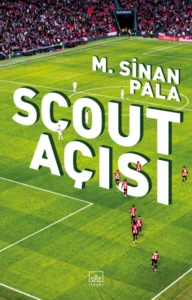
Five years ago, I wrote a football scouting book in Turkish called Scout Açısı. I did not write it because I wanted to become an author, nor because I saw a commercial opportunity in football publishing. The book came out of professional frustration, built over years of watching how scouting functioned in practice and becoming increasingly uncomfortable with how inconsistent, fragmented, and personality-driven the process often was.
That frustration was not about a lack of intelligent people in football. Quite the opposite. I knew experienced observers, thoughtful practitioners, and people who genuinely understood the game. The problem was structural. Two scouts could watch the same player and produce reports that looked as if they came from entirely different professions. Basic terms were used inconsistently. “Potential” meant one thing to one person and something entirely different to another. Positional definitions were often vague. Reports varied wildly not because players were difficult to interpret, but because the process itself lacked shared language, methodological discipline, and clear expectations.
That was the chaos that pushed me toward writing. By the time Scout Açısı was published, I had already spent years writing and speaking about football. My first published football article was for ALS Fanzine, a Sunderland platform, where I wrote about Alfred N’Diaye’s transfer from Bursaspor to Sunderland. Over time, that grew into magazine articles, blog writing, and regular radio appearances discussing scouting, match analysis, and broader football issues in Turkey. The book did not emerge from nowhere. It was the accumulation of years of thinking about the same recurring problems from different angles.
What made the decision to write the book different was the feeling that scattered commentary was no longer enough. The profession needed structure. At the time, Scout Açısı was not conceived as a business project. In fact, I explicitly told the publisher to keep the book as affordable as possible. My priority was not maximizing revenue. It was making the material accessible, especially to younger football people trying to understand a profession that often felt unnecessarily opaque from the outside.
What happened afterward surprised me. Scout Açısı eventually became the second best-selling title in Ithaki’s sports series, behind only the Turkish edition of Inverting the Pyramid, while becoming the most commercially successful Turkish-written football methodology book in that category. That was never part of the plan, and to be honest, it remains secondary in my mind compared to something far more meaningful: the number of people who later told me this was the book that introduced them to scouting as a serious discipline.
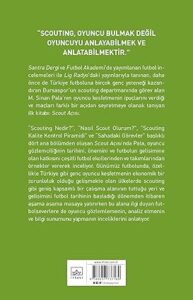
That matters because Scout Açısı was never meant to be a monument. It was meant to be useful. Its purpose was relatively straightforward: to make football scouting less chaotic, more coherent, and easier to communicate across professional roles. My thinking at that stage was centered on observation, profiling, terminology, and reporting discipline. The core question was simple: how do we create more consistency in how football evaluates players?
Five years later, I still think that was the right question. It just turns out it was not the biggest one.
What Scout Açısı Was Actually Trying To Do
With hindsight, it is important to define Scout Açısı accurately. It was never intended to be a complete football recruitment operating system, nor a final theory of scouting. It was not written to solve every decision-making problem inside professional football. The real question it tried to answer was far more fundamental: what is scouting, really?
At the time, the term itself was being used carelessly and inconsistently. For some, scouting meant simply finding players. For others, it meant watching highlight clips, compiling names, or making instinctive recommendations after limited exposure. In some conversations, scouting was treated as recruitment itself, while in others it was reduced to observational note-taking. That conceptual confusion mattered because when people use the same word to describe entirely different processes, consistency becomes impossible. Before methodology could be discussed meaningfully, the discipline itself needed clearer definition.
A major part of Scout Açısı was therefore not about methodology in the narrow operational sense at all. It was about football itself. My belief then, as now, was simple: scouting without deep football understanding becomes shallow observation. A player cannot be evaluated properly in isolation from the football world that shaped his role, responsibilities, and context. If you do not understand why defensive systems evolved the way they did, how tactical responsibilities shifted across generations, or how football cultures developed different interpretations of the same positional ideas, your evaluation will inevitably become incomplete.
That is why so much of the book focused on football’s tactical and cultural evolution. The exploration of early formations, La Máquina, the Hungarian revolution, Catenaccio, Jogo Bonito, Menottismo, Bilardismo, Total Football, Gegenpressing, Juego de Posición, and other football schools was never included as historical decoration. It served a practical purpose. Football changes constantly, but rarely in a vacuum. Many ideas presented as modern innovations are in reality refinements, adaptations, or reactions to concepts that existed decades earlier. Without understanding where football ideas come from, it becomes far easier to misunderstand what is happening in the present.
That historical perspective was not merely about appreciating football history. It was about improving interpretation. A scout who understands only modern tactical vocabulary sees less than one who understands the intellectual lineage behind roles and systems. The same movement can carry different meaning depending on the cultural or tactical context in which it exists. A defensive action in one system may indicate discipline, while in another it may expose a structural weakness being compensated for. Scouting requires more than noticing actions. It requires understanding why those actions exist.
Another central purpose of the book was redefining scouting itself. Scouting is often reduced to player hunting, but I never believed that was an accurate description of the craft. Finding names is the most superficial layer of the process. Scouting, in its more meaningful sense, is about understanding and communicating football reality. A scout’s responsibility is not simply to identify a player, but to interpret performance, context, role suitability, decision-making, behavior, strengths, weaknesses, and potential trajectories in a way that becomes useful to others.
This naturally led to one of the book’s most important distinctions: watching football and scouting football are not the same activity. Watching is passive. It follows emotion, habit, entertainment, and instinctive reactions. Scouting is structured observation with intent. The scout is not merely following the ball or reacting to highlights. The scout is asking constant questions. What is this player actually being asked to do? What happens when the ball is elsewhere? How much of the performance belongs to the player, and how much belongs to the surrounding system? Does the visible action reflect genuine quality, or merely a tactical environment that flatters certain behaviors?
Only after building this conceptual foundation did Scout Açısı move into more practical territory. Observation discipline, reporting habits, quality control thinking, market awareness, positional interpretation, and the early form of the 5+1 method were introduced as practical tools. But those structures were intentionally built on top of football understanding rather than separated from it. A methodology without conceptual grounding becomes mechanical box-ticking. The purpose was always to create more thoughtful observers, not robotic evaluators.
If I were to summarize Scout Açısı honestly today, I would describe it not simply as a scouting methodology book, but as an attempt to explain football observation through history, culture, tactical understanding, and structured thinking. The operational systems I developed later became far more sophisticated, but the intellectual foundation was already there. The core belief has not changed: better scouting begins with seeing football more clearly.
What Aged Well
Time has a useful way of exposing weak ideas. Some concepts collapse quickly once they are tested by reality. Others survive because they were built on something fundamentally sound. Looking back at Scout Açısı, there are certainly areas I would approach differently today, but there are also convictions from that period that have only become stronger.
Perhaps the clearest is one of the book’s central ideas: scouting is not about finding the player, but understanding the player. That distinction still matters because football often reduces scouting to discovery, as if the profession’s main purpose is simply identifying names before others do. That interpretation has always felt too shallow to me. Finding a player is the easiest part of modern football. Names are everywhere. Databases are everywhere. Clips are everywhere. Recommendations come from every direction. The real challenge is not discovery. The real challenge is interpretation.
The important questions remain deeper than the name itself. What exactly is this player? Why does he perform the way he does? Which parts of his performance belong to him, and which belong to the system around him? How stable are those strengths? How context-dependent are they? How transferable are they? Those questions remain central to serious scouting because they separate player understanding from simple player spotting.
Another belief that aged well is the importance of common language. This may sound obvious, but football remains surprisingly inconsistent in how it communicates internally. Terms that appear straightforward often hide entirely different meanings depending on who is using them. A scout may describe a midfielder as intelligent because of scanning behavior and positional awareness. A coach may hear the same word and think of tactical obedience. A sporting director may interpret it as leadership or game management. None of those interpretations are inherently wrong, but if departments use shared vocabulary without shared definitions, alignment becomes fragile.
That problem was central to Scout Açısı, and I believe it remains central today. Better software, larger departments, and more information do not automatically solve communication problems. In some cases, they make them worse. More information without conceptual clarity simply creates more sophisticated confusion.
Another idea I would defend even more strongly today is the importance of football history and football culture in scouting education. One of the defining characteristics of Scout Açısı was that it spent significant time explaining how football evolved, how different cultures shaped tactical thinking, and why positional ideas cannot be understood in isolation from that history. That was not included as decoration. It was practical.
A scout who understands only present-day tactical vocabulary sees less than one who understands the intellectual lineage behind the game. Modern football loves fresh terminology, but many supposedly new ideas are refinements, adaptations, or rebrandings of concepts that existed decades earlier. Positional roles shift meaning over time. Tactical responsibilities evolve with structure, tempo, and football culture. Without understanding where ideas come from, it becomes easier to misread what a player is actually doing.
The distinction between watching football and observing football also remains fundamental. Entertainment viewing and scouting are not the same discipline. Watching follows emotion, habit, narrative, and instinctive reaction. Scouting requires intention. It demands attention to actions away from the ball, patience with less visible patterns, and discipline against overvaluing dramatic moments. A spectacular action is memorable, but a structurally intelligent one is often quieter.
The same is true for reporting discipline. The frameworks in Scout Açısı were early compared to how I think now, but the principle underneath them remains sound. Football knowledge becomes useful only when it can be communicated clearly enough for others to act on it. A good observation trapped inside one person’s mind has limited organizational value. A vague report creates ambiguity rather than clarity. A recommendation without reasoning creates dependence on authority rather than trust in process.
The final belief that clearly aged well is skepticism toward pure intuition. Football will always involve judgment, and it should. Experienced football people develop pattern recognition precisely because they have seen the game deeply and repeatedly. But intuition without structure remains dangerous, especially in collaborative environments where decisions affect budgets, squad planning, and long-term strategy. The answer is not removing human judgment from football, but making human judgment more disciplined.
If parts of Scout Açısı still resonate today, I suspect it is because those concerns remain unresolved. The tools changed. The language evolved. My own frameworks became far more sophisticated. But the central diagnosis, that football needs clearer thinking, stronger methodology, and more disciplined communication, still feels fundamentally correct.
What I Missed
If Scout Açısı captured some important truths, it also reflected the natural limitations of where my thinking stood at that stage. That is not false modesty. It is simply the reality of looking back at earlier work after several years of practical experience, deeper reflection, and a football landscape that continued evolving alongside my own thinking.
When I wrote the book, my primary concern was making scouting itself more coherent. My focus was on observation quality, reporting discipline, terminology, tactical understanding, and player interpretation. Those were valid concerns, and I still believe they mattered. But they were centered largely around the evaluation process itself. Implicitly, I believed that if football became better at observing and describing players, decision-making would naturally improve as a consequence. Today, I think that assumption was incomplete.
A club can have competent scouts, accurate observations, strong reports, useful data, and still make poor recruitment decisions. Not because the evaluations were wrong, but because evaluation is only one component of a much larger decision chain. At the time, I was thinking deeply about how to improve scouting as an observational craft, but I was not yet thinking deeply enough about what happens after the observation enters the organization. That became one of the most important blind spots I recognized over time.
The clearest example of this is identity. If I were writing Scout Açısı today, identity would sit far closer to the center of the conversation. Back then, I understood that context mattered, but I had not yet fully developed the belief that evaluation without identity is inherently incomplete. Football often talks about players as if they exist as fixed assets whose quality can be judged universally, detached from environment. Experience has pushed me firmly away from that view.
The real question is never simply whether a player is good. It is whether that player is good for a specific context: a specific club, a specific coach, a specific game model, a specific tactical role, a specific financial reality, and a specific stage of squad development. A player who thrives in one structure may become ineffective in another. A profile that solves one club’s problem may create entirely different issues elsewhere. A smart short-term signing may be the wrong long-term decision. Without identity, evaluation remains abstract rather than actionable.
Another major gap was operational thinking. Scout Açısı focused heavily on scouting as a professional craft, but far less on scouting as an organizational system. At the time, I was primarily concerned with making individual observation better. I had not yet fully shifted toward thinking about workflow, governance, role allocation, quality control, and structural discipline. That distinction matters enormously because a strong scout inside a weak process still produces weak outcomes.
A well-written report inside a chaotic department remains vulnerable to misuse or irrelevance. If communication channels are unclear, if decision rights are undefined, if cross-checking is weak, if recruitment discussions become reactive, or if external pressures bypass process, then even good evaluation loses practical value. Improving the quality of observation does not automatically improve the quality of outcomes if the surrounding system is flawed.
The same applies to decision architecture. A scouting report can describe what a player looks like, explain strengths and weaknesses, and present a useful football interpretation. But that does not automatically tell a club what decision should follow. Evaluation and decision-making are related, but they are not identical disciplines. A technically strong report does not resolve questions of timing, price, strategic fit, squad planning priorities, or whether immediate action is wiser than continued monitoring. Information, by itself, is not decision logic.
Looking back now, I think Scout Açısı succeeded in making scouting thought clearer, but it did not yet fully connect scouting to identity, operations, governance, and structured decision-making. That does not make the book wrong. It simply means it represented an earlier stage in an intellectual journey that was still unfolding, which is exactly how serious football thinking should work.
What Football Changed
It would be intellectually dishonest to frame this story as if only my own thinking evolved while football itself remained static. One of the reasons Scout Açısı now feels like an earlier stage of a larger journey is that the game itself changed significantly over the last five years, not only tactically, but structurally in how clubs think about recruitment, analysis, and performance interpretation.
One of the clearest shifts has been the relationship between scouting and analysis. Not long ago, these functions often existed in parallel rather than in genuine collaboration. Scouts watched players, analysts worked with data or match interpretation, and communication between the two could be inconsistent depending on the club. In some environments, the relationship was even territorial, as if observation and analysis were competing disciplines rather than complementary ones.
That separation makes less and less sense in modern football. The strongest recruitment environments increasingly understand that observational scouting and analytical work are not opposing perspectives. They are different lenses examining the same football reality. Data can reveal patterns that observation misses. Observation can explain patterns that raw data cannot interpret properly. Video analysis can add context, tactical structure, and behavioral nuance. None of these methods are complete in isolation, which is why recruitment quality increasingly depends on integration rather than professional silos.
Football also became more tactically specialized. Even five years is enough time for meaningful tactical shifts. Role interpretation became sharper. Game models became more explicitly defined. Recruitment conversations increasingly moved away from generic player quality discussions toward role-specific and system-specific thinking. The question is less often whether a player is simply “good,” and more often whether he solves a precise football problem inside a defined structure.
That is a healthier direction because generalized scouting language creates vague recruitment thinking, while specific tactical understanding creates sharper decisions. A full-back, for example, can now represent radically different functional profiles depending on the team’s structure. The same nominal position can demand progression, inversion, width creation, defensive isolation, underlapping movement, or rest-defense stability. Positional labels increasingly became insufficient shorthand for actual football responsibilities.
That shift reinforced many things I already believed, while also exposing how much deeper contextual evaluation needed to become. It pushed football further away from broad labels and closer to the harder question of function: what does this player actually do inside this team, against this opponent, in this phase of the game?
Data normalization also changed the environment. Five years ago, data use in football was already established, but the quality of interpretation around it has matured considerably. Better contextual metrics, role-sensitive analysis, and broader acceptance of analytical support changed the conversation. That does not mean football solved its data problems. Misuse remains common, vanity metrics still exist, and context-free comparisons still mislead people. But the baseline sophistication improved.
This matters because modern scouts increasingly operate in environments where raw observation alone is no longer enough. That is not a criticism of traditional scouting. It is a reflection of the decision environment becoming more layered, where a player’s performance has to be interpreted through observation, video, data, tactical context, and organizational need.
The game itself also became faster in its information flow. More footage, more accessible databases, more public tactical discourse, more player visibility, more recommendation channels, more intermediaries pushing names, and more pressure to move quickly all changed the scouting environment. Yet the paradox is obvious: more information does not always produce better decisions. Sometimes it produces noisier ones.
One of football’s persistent modern problems is confusing access to information with understanding. When names arrive from every direction and players are visible everywhere, discovery becomes less scarce, but interpretation becomes even more important. The bottleneck shifts from finding players to making sense of overwhelming inputs, and that change is central to how I think now.
Football also became more specialized in staffing structures, at least in serious environments. Dedicated analysts, data teams, recruitment managers, technical directors, and hybrid decision roles became more common. Not every club operates well, of course, but structurally, football increasingly acknowledges that recruitment is too important to remain informal.
That evolution exposed something important: the real competitive advantage is no longer simply information access, but organizational clarity. That realization became one of the bridges between the first book and everything I developed afterward.
What Still Remains Broken
If football evolved in meaningful ways over the last five years, it would be equally dishonest to pretend its core structural problems disappeared. In some areas, the tools improved faster than the thinking behind them. In others, complexity increased without necessarily producing greater clarity. Many of the frustrations that originally pushed me toward writing Scout Açısı still exist, only in updated forms.
One of the most persistent weaknesses in modern football is that scouting and recruitment remain far too person-centric rather than process-driven. Many clubs still rely heavily on individuals instead of systems. A strong sporting director can temporarily create coherence. A respected chief scout can impose standards. A trusted coach can align recruitment toward a clear football idea. But when the structure depends primarily on personalities rather than institutional design, stability becomes fragile. As soon as key people leave, the logic often leaves with them.
That remains one of football’s most underestimated structural weaknesses because a healthy scouting department should not function like a collection of strong opinions loosely interacting around transfer windows. It should function like an operating system. Roles should be clear. Decision rights should be clear. Evaluation standards should be clear. Escalation paths should be clear. Cross-checking should be routine rather than occasional. Recruitment should remain disciplined even when external pressure rises.
This is also why I increasingly believe football misdiagnoses many recruitment failures. Poor signings are often framed as scouting failures, as though the club simply failed to recognize quality. That explanation feels increasingly incomplete. Modern football is too visible for discovery itself to be the primary bottleneck. Players are accessible. Video is accessible. Data is accessible. Recommendations arrive constantly through agents, intermediaries, public databases, analysts, and networks.
The real failures usually happen later, after the player has already been identified and described. A player may be genuinely talented, correctly observed, accurately described, and still become the wrong signing because the surrounding decision process failed. The tactical role may have been misunderstood. The club’s actual football identity may have been unclear. Squad planning priorities may have shifted reactively. Budget implications may have been poorly judged. Emotional urgency may have overridden strategic discipline. From the outside, these cases are often labeled scouting mistakes, but in reality they are usually process failures disguised as talent evaluation failures.
Role confusion remains another major issue. Football still talks far more in positional labels than functional responsibilities. Saying a team needs a winger, a full-back, or a midfielder often says remarkably little about the actual football problem being solved. Modern football roles are increasingly specialized, yet recruitment discussions often remain surprisingly generic. The same positional label can represent completely different tactical demands depending on structure, game model, and coaching philosophy. This is one of the reasons clubs often end up collecting names instead of solving needs.
Internal communication remains another persistent weakness. Even in clubs with intelligent staff, information frequently becomes fragmented between scouts, analysts, coaches, recruitment leads, sporting directors, and executives. Specialization has improved football in many ways, but specialization without structural alignment creates a different kind of dysfunction.
A technically strong scouting report has limited value if the coach interprets the player through a different football lens, the analyst sees conflicting signals, the recruitment department is solving a different problem, and executive decision-making is operating under short-term pressure. In those environments, information does not produce clarity. It produces friction.
External pressure continues to distort decision-making as well. Football rarely operates in clean, rational environments. Agent influence, media narratives, market momentum, opportunistic recommendations, internal politics, and emotional reactions to recent results all shape recruitment conversations. Pressure itself is unavoidable. The real question is whether the process is strong enough to absorb pressure without abandoning discipline, and too often it is not.
Short-termism remains deeply embedded in the sport for the same reason. Football speaks frequently about strategy, long-term planning, and sustainable squad building, yet operational behavior often remains reactive. A poor run changes priorities overnight. Injuries create panic. Transfer opportunities trigger fear of missing out. Strategic language frequently collapses under short-term pressure because the underlying processes were never truly built to protect long-term thinking.
Perhaps the most stubborn unresolved problem is football’s tendency to confuse information gathering with decision quality. Watching more players does not automatically improve recruitment. Collecting more reports does not automatically improve recruitment. Adding more data does not automatically improve recruitment. Those inputs matter, but only if the organization knows how to convert information into coherent decisions.
So yes, football changed. The tools improved. The language became sharper. The visibility of the market expanded dramatically. But in many environments, the structural thinking behind scouting and recruitment still remains far less mature than the tools supporting it.
What Evolved In My Thinking
If the first phase of my thinking was centered on making scouting observation clearer, the years that followed pushed me toward a much broader conclusion: football’s deeper problem is not simply evaluation quality, but decision architecture.
That realization did not arrive suddenly. It emerged gradually through repeated exposure to the same structural failures. I kept seeing clubs with intelligent people making inconsistent decisions. I saw strong reports producing weak outcomes, accurate evaluations being neutralized by poor process, and recruitment conversations shaped more by urgency, personalities, incomplete alignment, or unclear priorities than by coherent methodology. Over time, it became increasingly difficult to believe that improving observation alone was enough.
The most significant evolution in my thinking was the role of identity. When I wrote Scout Açısı, I understood that context mattered, but it had not yet become the organizing principle of my football thinking. Today, I see identity as foundational. A player cannot be meaningfully evaluated in abstraction. Football constantly encourages universal judgments, asking whether a player is good, talented, or high potential as though those qualities exist independently of environment. Experience taught me to reject that framing.
The real question is always contextual. A player must be evaluated against a specific football reality: a club’s game model, coaching expectations, tactical responsibilities, squad-building timeline, cultural environment, positional needs, and financial constraints. A technically accurate report can describe a player extremely well, but if the organization has not clearly defined what it actually needs, that accuracy remains descriptive rather than actionable.
This shift changed how I viewed scouting itself. Earlier, I thought primarily in terms of observation, interpretation, and reporting. Those still matter enormously, but I no longer see scouting as an isolated observational discipline. I see it as one component inside a larger football decision system. Observation has limited value if disconnected from organizational clarity. Interpretation becomes weaker if it is separated from strategic context. Reporting becomes less useful if the surrounding process cannot convert information into decisions.
That naturally pushed my thinking toward operations. I began thinking far more about workflow, governance, role allocation, quality control, escalation paths, and structural discipline. This was not because individual scouting craftsmanship became less important, but because repeated experience made something clear: craftsmanship without process is fragile. A strong scout inside a chaotic environment can temporarily produce useful work, but weak structures eventually distort even good output. Sustainable quality requires more than talented individuals. It requires repeatable systems.
Another major shift concerned decision logic itself. At some point, it became obvious to me that evaluation and decision-making are connected, but they are not the same discipline. A player can be accurately understood and still represent the wrong decision. Timing matters. Financial cost matters. Squad composition matters. Opportunity cost matters. Strategic planning matters. Market conditions matter. Football often behaves as though identifying talent is the final objective, when in reality it is only one stage of a much larger decision process.
That realization fundamentally changed how I approached recruitment thinking. It became increasingly clear that clubs needed more than better reports. They needed clearer executive decision logic. Understanding a player’s strengths and weaknesses does not automatically answer whether he should be signed now, monitored for later, or ignored entirely. Evaluation creates information. Decision-making requires judgment architecture.
This also changed how I thought about competitive advantage. Earlier, much of my thinking centered around improving scout quality. Today, I think much more about improving organizational quality. A brilliant individual can temporarily elevate a weak environment, but that advantage is fragile and often personality-dependent. A strong system improves the consistency of everyone operating inside it. Sustainable football advantage rarely comes from isolated excellence alone. It comes from repeatable clarity.
That may be the most important shift of all. If I were starting from scratch today, the book would begin with very different questions than the ones that shaped Scout Açısı. That does not mean the earlier work was wrong. It means experience, football’s evolution, and repeated exposure to structural reality pushed my thinking toward a wider and more connected framework.
Ultimately, that is why a second book became necessary.
Why This Work Continues
If Scout Açısı had remained only a book, this story would feel incomplete.
One of the strange illusions created by publishing is the sense of finality. A book appears finished. It becomes a physical object, sits on a shelf, and presents itself as a complete statement. But serious football thinking rarely works that way. If the work is intellectually honest, it continues evolving long after publication, sometimes because the game itself changes, sometimes because practical experience changes the author, and often because the original questions turn out to be much larger than they first appeared.
That is what happened here. Over the years, one of the most meaningful aspects of Scout Açısı’s journey was hearing from readers who told me the book became their first serious introduction to scouting as a structured discipline. Some started their curiosity there. Some used it as an early guide for understanding football observation more seriously. Others found language for ideas they had sensed intuitively but had never seen articulated clearly. That impact always mattered to me far more than commercial success.
The commercial outcome was, in truth, a surprise rather than an objective. I never wrote the book to maximize sales, and I explicitly wanted it priced as accessibly as possible because the goal was reach, not exclusivity. Seeing it become widely read was gratifying, but the far more meaningful realization was understanding that for many people, this book had become a starting point.
That creates a certain responsibility. If readers entered this part of football through my earlier thinking, then I owe them something more intellectually honest than repetition. I owe them evolution.
Five years later, I do not think exactly the same way I did when I wrote Scout Açısı. Football does not think the same way either. The profession became more specialized, the tactical language sharper, the information environment faster, and the decision-making landscape far more complex. My own thinking expanded from observation toward systems, from evaluation toward decision architecture, and from individual scouting craftsmanship toward organizational design. Pretending otherwise would be dishonest.
That is one of the reasons this website exists. msinanpala.com is not a promotional extension of an earlier book. It is the continuation of the same intellectual journey in a broader and more dynamic format. The questions that began in Scout Açısı did not disappear after publication. They expanded. Football scouting naturally led into football analysis. Football analysis led into game model thinking. Tactical interpretation led into structural questions about methodology, recruitment logic, and organizational coherence. The deeper I explored football professionally, the clearer it became that the original book had been a beginning rather than a conclusion.
Some ideas fit books. Others require ongoing conversation, adaptation, and refinement. This website became the space for that continuation.
Writing in English is part of that evolution as well. Scout Açısı was written in Turkish because that was the audience I was speaking to at the time, and because the problems I was trying to address felt especially relevant in that environment. But the deeper structural issues behind the work were never uniquely Turkish. Football’s communication problems, fragmented recruitment processes, unclear methodologies, and decision-making failures are not local phenomena. They are widespread structural football problems.
Writing in English changes the reach of that conversation. It allows the next phase of the work to travel beyond the boundaries of the first, which is why the second book could not simply be a revised edition or translation of Scout Açısı. For some time now, I have been working on Scout’s Vision – Expanding Horizons, a more evolved expression of where my thinking eventually arrived after everything the first book began.
If Scout Açısı was about explaining scouting itself, football roots, football cultures, observation discipline, and the first structured steps into evaluation, the second book is about the larger architecture surrounding those ideas. Identity, methodology, role interpretation, decision logic, workflow, systems, and organizational coherence now sit far closer to the center of my thinking.
In many ways, it is the book I needed years of additional experience to be capable of writing. And if the first book helped people begin their journey, then five years later, offering a more evolved version of that thinking feels less like a project and more like an obligation.
What Comes Next
Looking back at Scout Açısı, I do not see a book that got everything right, nor do I see one that became obsolete. What I see is a snapshot of where my football thinking stood at a particular moment, shaped by the questions I was asking, the frustrations I was trying to solve, and the level of understanding I had reached at that stage. That is probably the healthiest way to look at serious work, because ideas should evolve, frameworks should be challenged, and practical experience should expose weaknesses in earlier assumptions. Football itself refuses to stand still, and any attempt to think seriously about it has to accept that movement rather than resist it.
What matters to me most is that the original motivation remains intact, even if the scale of the questions changed. I still believe football needs clearer thinking. I still believe methodology matters. I still believe language matters. I still believe player evaluation becomes dangerous when detached from context. I still believe recruitment quality depends as much on decision structures as observational quality. And I still believe football loses clarity when emotion, urgency, personalities, or vague assumptions replace disciplined thinking.
Those convictions did not disappear. They became broader, deeper, and far more interconnected.
If Scout Açısı was the beginning of that thinking, then this website became the living continuation of it. Many of the ideas that started in the book eventually expanded into much larger conversations that deserved their own dedicated space. That is why the work here grew into broader frameworks around scouting, football analysis, tactical interpretation, and game model thinking. The Complete Guide to Football Scouting, the Complete Guide to Football Analysis, the Complete Guide to Understanding Game Model, and ultimately the broader Complete Guide to Modern Football all emerged from the same intellectual trajectory rather than disconnected interests.
The deeper I worked inside football thinking, the clearer it became that the most interesting problems are rarely about isolated player observation alone. They are about systems, interpretation, incentives, structure, communication, methodology, and decision-making under uncertainty. The first book asked what scouting is, where it comes from, and how it should be approached with greater discipline. The next phase asks a much harder question: how should football organizations actually think?
That question is what continues to drive my work now. It is the reason the website exists. It is the reason a second book became necessary. And it is the reason I do not see Scout Açısı as a finished conclusion, but as the first major step in a longer body of work that is still evolving.
Scout’s Vision – Expanding Horizons is the next expression of that evolution, not because the first book failed, but because serious thinking should not remain frozen at the point where it first found an audience. Football changes too quickly, and practical understanding evolves too much, for intellectual work to remain static without becoming less honest.
If there is one thing I have learned since publishing Scout Açısı, it is that clarity is not a destination. It is an ongoing discipline. And if the first five years were about refining the questions, the next phase will be about answering them more completely.